Denver Bicycle Accident Lawyer on Filing Claims Against Commercial Drivers
A bicycle crash involving a commercial driver rarely behaves like an ordinary traffic claim. The injuries are often more severe, the insurance coverage is usually larger, and the defense response starts earlier. A delivery van company, utility contractor, shuttle operator, or long-haul carrier may have risk managers, outside adjusters, and defense counsel involved within days. For an injured cyclist in Denver, that changes everything about how a case should be investigated, valued, and presented.
When people search for a Bicycle Accident Lawyer Denver cyclists can trust, they are often dealing with more than road rash and a bent wheel. They are facing lost income, surgery recommendations, a bike that may cost several thousand dollars to replace, and an insurer already looking for ways to shift blame. Commercial vehicle cases add another layer because the driver may have been working under a schedule, using an employer-owned vehicle, checking dispatch software, or operating under company safety rules that become important evidence later.
The legal claim is still, at its core, about negligence. But in practice, these cases are won or lost on details that many injured riders do not realize matter until weeks have passed. A close pass downtown near a bike lane, a right hook by a delivery truck in Capitol Hill, or a van door opened by a service technician in LoDo can trigger questions about employer liability, electronic data, maintenance records, and whether a company preserved evidence it had a duty to keep.
Why commercial driver cases are different from ordinary car claims
A crash with a private driver usually centers on one person’s conduct and one personal auto policy. A crash with a commercial driver can involve the driver, the employer, a separate vehicle owner, a maintenance vendor, and sometimes a contractor relationship that is more complicated than it first appears. The company may argue the driver was an independent contractor. The driver may claim a cyclist was in a blind spot. The insurer may admit contact happened but deny that the impact caused the full scope of the rider’s injuries.
That is why timing matters so much. Commercial entities often have systems private drivers do not. Vans may carry GPS logs. Fleet vehicles can record speed, braking, route history, and sometimes inward or outward facing camera footage. Delivery schedules can show whether a driver was rushing. Cell phone records may reveal distraction. Driver qualification files may show training gaps, prior safety complaints, or licensing problems. Some of that evidence disappears in the ordinary course of business unless someone acts quickly to preserve it.
A Denver bicycle accident claim against a commercial driver also tends to invite more aggressive fault arguments. Cyclists hear familiar lines all the time: you came out of nowhere, you were riding too fast, you should have been more visible, you were outside the bike lane, you were between lanes, you were not wearing bright clothing. Those defenses are not new, but they are especially common when a company is trying to reduce exposure on a high-value claim. Colorado’s comparative negligence rules can reduce recovery if the injured cyclist is found partially at fault, and if fault crosses the legal threshold, recovery can be barred. That makes early factual development essential.
The first week after the crash often shapes the whole case
In a perfect world, every important fact would be preserved automatically. That is not how these claims unfold. By the time an injured rider is home from the emergency room, skid marks may be gone, surveillance footage may already be on a short overwrite cycle, and witnesses may be harder to locate. Meanwhile the commercial insurer may have already contacted its driver and collected a recorded statement.
An experienced lawyer starts with the scene and the vehicle, not just the medical chart. Where exactly did the collision happen? Was there a marked bike lane? Did the truck or van turn across the cyclist’s path? Was the rider overtaking stopped traffic? Did the crash happen during daylight, dusk, or after dark? Was there construction narrowing the lane? Denver streets vary block by block, and liability often turns on geometry. A right-turn crash at a busy downtown intersection presents different proof issues than a sideswipe on a suburban arterial with patchy shoulder space.
It also matters what kind of commercial vehicle was involved. A local box truck making repeated stops creates one set of risks. A rideshare or livery vehicle stopping unexpectedly creates another. A city contractor operating near cones and equipment raises different questions again. The claims process should be built around the actual use of the vehicle, not around a generic assumption that all commercial cases are the same.
What an attorney looks for before sending a demand
Insurance companies like neat stories. Good plaintiff-side preparation disrupts the easy defense narrative by building a case from records, physical evidence, and common sense. Before serious settlement discussions begin, a lawyer handling a bicycle crash with a commercial driver usually wants to understand several things at once: how the crash occurred, who is legally responsible, how severe the injuries are likely to be over time, and what insurance applies.
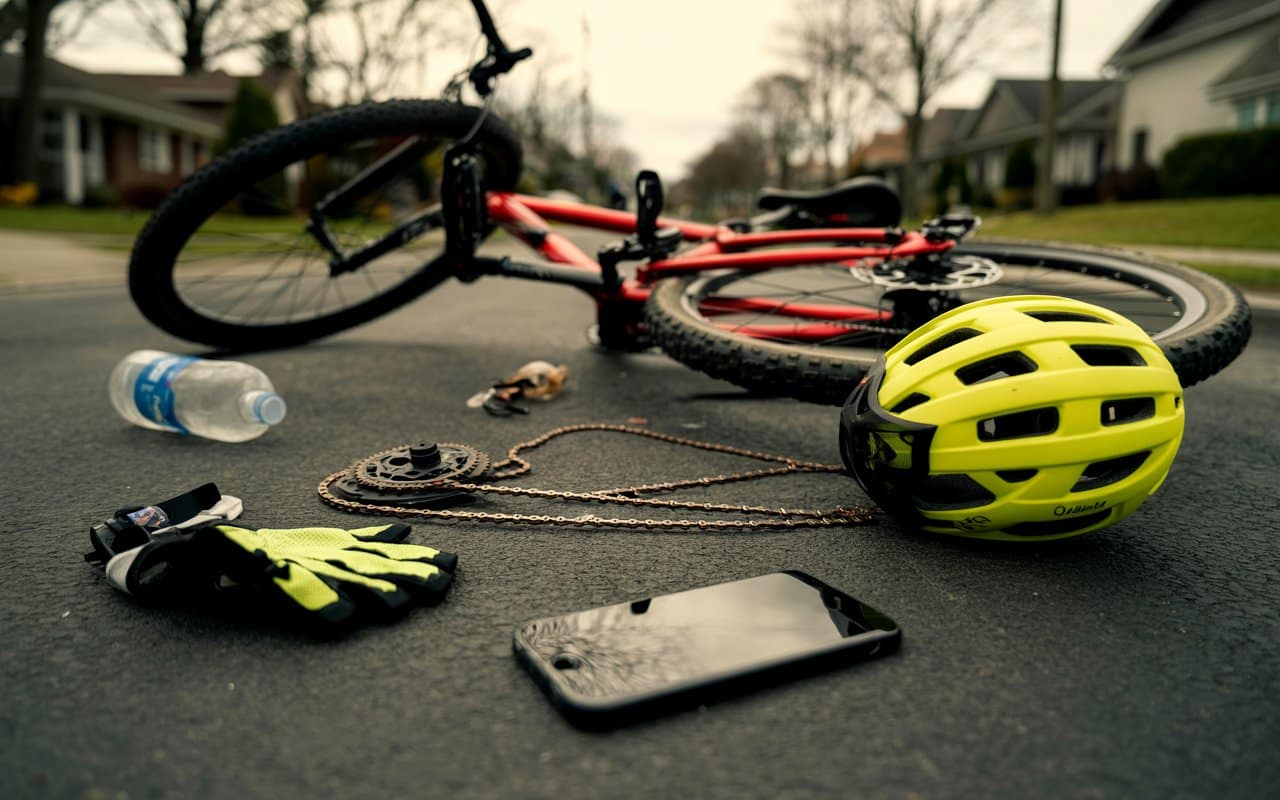
That work often includes obtaining the police report, speaking with witnesses, photographing the bicycle and gear, preserving helmet evidence, securing body camera or dash camera footage if available, and collecting the injured cyclist’s treatment records in sequence rather than as a pile of unorganized PDFs. The chronology matters. So does the way symptoms developed. A rider who initially declined transport but saw escalating neck pain, hand numbness, or knee instability over the next 48 hours is not unusual. Defense adjusters know people in shock often underreport symptoms at the scene. Yet they still try to weaponize that gap when the claim is later presented.
Medical documentation is especially important in bike cases because many injuries do not look dramatic from the outside. A clavicle fracture, wrist fracture, meniscus tear, labral injury, or concussion can significantly disrupt work and daily life even if the rider was wearing a helmet and never lost consciousness. Cyclists also tend to minimize pain and return to activity too early, which can backfire in the legal process. If treatment is inconsistent, the insurer may argue the injuries resolved quickly or were not serious in the first place.
Employer liability is often the hinge point
The commercial driver may be the person who made the bad decision, but the company behind that driver is often where meaningful recovery comes from. If the driver was acting within the course and scope of employment, the employer may be liable for the harm caused. That sounds simple, but businesses frequently resist that framing.
Some companies point to contractor agreements. Others claim the driver was off duty, making a personal stop, or outside the route assigned that day. Delivery and service businesses sometimes use layered ownership structures that make it less obvious who employed whom. One logo on a van does not always tell the full story. A careful claim investigation tries to identify the actual business relationships early, because naming the wrong entity or overlooking an additional insured can create avoidable delay.
There are also cases where the company’s own conduct matters independently of the driver’s negligence. If a business failed to train drivers on urban bike lane interactions, pressured staff to meet unrealistic delivery windows, ignored prior safety incidents, or let a poorly maintained vehicle stay in service, that evidence can strengthen the claim. It can also change the settlement posture, because a company with weak internal practices may prefer to resolve a case before broader discovery exposes those issues.
The kinds of evidence that matter most
Not every case has every category of proof, but commercial bicycle claims are usually stronger when the investigation pushes beyond the crash report.
- Scene evidence, including photos, measurements, lane markings, debris patterns, and nearby camera footage
- Vehicle and company records, such as maintenance logs, route assignments, driver training files, and dispatch communications
- Electronic data, including GPS history, telematics, dash camera footage, and phone use records where available
- Medical proof that ties the mechanism of injury to the cyclist’s symptoms, treatment, prognosis, and work limitations
- Human testimony from witnesses, first responders, treating providers, coworkers, and family members who saw the impact of the injuries
A strong claim does not require perfection in every category. Sometimes one neutral witness and good orthopedic records carry the case. In other matters, the turning point is a surveillance clip from a storefront that shows a van cutting across a bike lane without signaling. The point is that commercial cases reward thoroughness. The more objective the proof, the less room the defense has to recast events.
Common crash patterns involving cyclists and commercial vehicles in Denver
The facts repeat often enough that experienced lawyers start recognizing patterns. One of the most common is the right hook. A truck, van, or service vehicle passes a cyclist and then turns right across the rider’s path, often underestimating the cyclist’s speed or simply failing to look. Another is the wide vehicle squeeze, where a driver tries to share a lane that does not safely fit both the vehicle and the bicycle. Dooring incidents are also common when commercial drivers or passengers stop curbside and open into the cyclist’s line of travel.
Delivery activity has added another recurring hazard. Vehicles stopped in bike lanes force cyclists into traffic. Drivers backing unexpectedly or pulling away from curbs without checking mirrors create side-impact risks. In denser neighborhoods, rideshare and hotel shuttles can produce sudden loading-zone conflicts that look minor on paper but cause hard falls.
A recent shift many lawyers have seen is the amount of distraction baked into modern commercial driving. A driver may not be texting in the classic sense but can still be interacting with navigation, dispatch prompts, order-management apps, onboard tablets, or communication systems. Legally and practically, that still matters. Attention diverted for even a few seconds is enough to miss a cyclist approaching on the right.
Colorado fault rules can change the value of the case
Many injured people assume the driver either caused the crash or did not. Litigation is rarely that binary. In Colorado, comparative negligence can reduce the injured cyclist’s damages by the percentage of fault assigned to the cyclist. That means the defense has a strong incentive to argue that the rider contributed to the collision.
Sometimes that argument has a factual basis. A cyclist may have been riding against traffic, ignoring a signal, or moving unpredictably around parked cars. More often, the argument is inflated. A rider may be criticized for not using a bike lane that was blocked, debris-filled, or unsafe. The insurer may claim dark clothing made the cyclist hard to see, even though the collision happened in daylight and the real issue was an unsafe turn. A lawyer’s job is not to pretend weak facts do not exist. It is to put them in proportion and to separate them from the actual cause of the crash.
This is one place where a Bicycle Accident Lawyer Denver residents consult early can make a practical difference. Small admissions in a recorded statement, especially from a rider still medicated or shaken, can later be framed as fault. So can casual social media posts showing a bike ride weeks later without context about pain levels or restrictions. None of that means a person should hide facts. It means the claim should be handled carefully from the start.
Damages go far beyond the emergency room bill
Commercial insurers often begin with the visible numbers: ambulance, imaging, fracture care, physical therapy. Those are only part of the loss. Cyclists often suffer damage in layers. There are the immediate treatment costs, then missed work, then the less obvious disruptions that matter in both settlement and trial. A software engineer with a wrist fracture may be able to type only in short bursts. A restaurant worker with a knee injury may lose shifts entirely. A contractor with a concussion may struggle with balance, light sensitivity, and concentration long after scans appear normal.
The bicycle itself can also represent a substantial property loss. Road, gravel, and commuter bikes frequently cost from several thousand dollars upward once wheels, drivetrain, electronic shifting, helmet, lights, clothing, shoes, and accessories are counted. Carbon damage is not always visible to the naked eye, and insurers sometimes undervalue equipment because they think in terms of department store bikes rather than modern cycling gear. A proper claim documents replacement cost, repair opinions, and the risk of hidden structural damage.
Then there is the loss that does not fit neatly into receipts. For many riders, cycling is transportation, exercise, stress relief, and community. A serious crash can take away commuting independence or the ability to ride mountain routes, train for events, or simply feel safe in traffic again. Those harms are real. They are also easier to prove when the story is specific. A person who rode 80 miles a week before the crash and now cannot tolerate 20 minutes on a trainer presents a much clearer picture than someone who says only, “I don’t ride as much anymore.”
Settlement pressure starts earlier in commercial cases
It is common for insurers to test whether an injured cyclist will settle before the long-term picture is clear. The pitch can sound reasonable: we accept that our driver was involved, here is money for the bike and urgent care, let’s wrap this up. That can be dangerous if the rider has not yet seen a specialist, completed imaging, or learned whether surgery will be needed.
There is no universal rule that every case must be filed in court or must wait a set number of months before settlement. Some claims resolve efficiently because liability is clear, treatment is straightforward, and the injured person reaches maximum medical improvement on a predictable timeline. Others should not be valued until future care, work restrictions, or permanent impairment are better understood.
Experience matters here because the hard cases are not always the catastrophic ones. Moderate injuries with uncertain recovery can be the most difficult to value. A shoulder injury that may or may not need surgery, or a concussion with fluctuating symptoms, creates room for both sides to tell very different stories about the future.
What injured cyclists should do after a crash with a commercial driver
The legal strategy begins with practical steps. What a rider does in the days after the collision can preserve both health and the claim.
- Get a medical evaluation promptly, even if adrenaline masked symptoms at the scene
- Photograph the bicycle, helmet, clothing, injuries, vehicle, intersection, and any company markings
- Report the crash accurately, but avoid guessing about speed, distance, or fault
- Keep damaged gear and do not repair or discard the bike before it is documented
- Speak with counsel before giving a recorded statement to the commercial insurer
Those steps are not about gamesmanship. They are about accuracy. A claim is easier to defend when the evidence was preserved before memories blurred and physical proof changed.
Lawsuits are not always necessary, but readiness matters
Many commercial bicycle claims settle without trial. That said, the cases that settle well usually look trial-ready. Insurers pay more attention when they know the plaintiff’s side has identified the right corporate entity, collected the records, developed the damages story, and can present the cyclist as credible and prepared.
Filing suit may be necessary if liability is disputed, if the insurer minimizes injuries, or if the statute of limitations is approaching. Once litigation begins, the process can uncover useful material through written discovery, depositions, and subpoenas. Company witnesses may have to explain safety training, route expectations, prior complaints, and what happened to vehicle data after the crash. Those answers can clarify a case or expose weak defenses.
At the same time, filing suit is not a magic switch. It takes time, and it can increase costs and stress. Good lawyers weigh that trade-off honestly. The goal is not to litigate for its own sake. The goal is to create enough pressure, backed by enough evidence, that the other side values the case based on risk rather than wishful thinking.
Choosing counsel for this kind of claim
Not every personal injury case demands the same skill set. A bicycle collision with a commercial driver calls for someone comfortable with both serious injury work and the mechanics of urban cycling crashes. That combination matters more than many people realize.
A lawyer who understands cycling can spot defense arguments that sound plausible to non-riders but collapse under real-world scrutiny. For example, there are times when taking the full lane is safer and legally justified. There are also situations where a bike lane’s design creates conflict points that practically invite turning collisions. Those details should not have to be explained from scratch at every stage of the case.
A strong attorney also understands the economics of medical treatment, insurance liens, and case timing. It is one thing to demand a number. It is another to build a file that supports it, negotiate from leverage, and know when a case is being undervalued because the insurer is betting the injured person cannot wait.
For cyclists in the Denver area, that is often the real inflection point. The question is not only whether a claim exists. It is whether the case is being prepared in a way that accounts for commercial insurance tactics, Colorado fault law, the medical reality of bike injuries, and the practical losses riders actually live with https://www.flickr.com/people/204649828@N07/ after a crash. When those elements are handled well, claims against commercial drivers tend to look very different from the lowball version insurers hope to close early.